Skip to content
When you’re setting up video monitoring in industrial environments like sawmills, food processing plants, mines, or heavy-duty manufacturing, it isn’t enough just to buy “a camera.” The real question is: which camera will survive, keep working, and reduce downtime?
At Opticom Tech, we’ve built our reputation on industrial-grade video solutions because we know the difference between off-the-shelf cameras and cameras engineered for harsh environments.
What sets them apart? There are several differentiators to look for when evaluating industrial cameras. Let’s go through them one by one.
8 Hidden Differentiators to Look for When Buying Industrial Cameras
When choosing cameras for an industrial facility, we tell customers to look beyond the label. Saying a camera is industrial doesn’t mean it really is. Here’s what sets apart cameras that candle harsh industrial environments.
1. Housing Material and Build Integrity
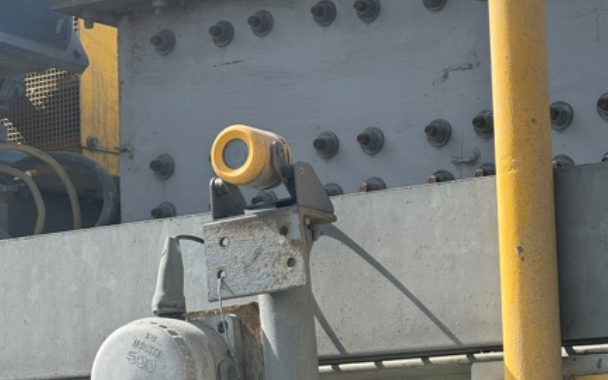
A camera that works fine in a warehouse might fall apart in a sawmill or mine. One major differentiator is the housing material and mechanical resilience. The CC02, for example, features a titanium-alloy housing, is specified for extreme temperatures, and was designed for vibration resistance.
Questions to ask:
- Is the housing rated for impact, vibration, dust, moisture, and chemical exposure?
- Are the internal components mounted to survive shock and sustained vibration?
- Are there examples of the camera surviving a real-world impact?
For instance, an Opticom CC04 camera was mounted on a live edger line at a sawmill and took a direct hit from a moving board. It kept working—just needed the mount replaced.
If the camera manufacturer can’t show you proof of durability, your risk is higher.
2. Vibration Resistance and Stabilization
In heavy-industry environments, vibration isn’t a fringe concern—it’s a constant. If the camera is mounted on or near moving machinery, conveyors, or heavy equipment, vibration can degrade image quality, reduce component life, and increase maintenance for non-industrial cameras.
While some cameras rely on DIS (Digital Image Stabilization) as a workaround, we’ve engineered a solution that eliminates the need for it altogether. You get crystal clear feeds, no matter how much vibration the camera experiences.
3. Ingress Protection (IP Ratings)
IP ratings tell you the camera’s resistance to dust and water. In industrial environments you might face dust, sawdust, wood chips, corrosive spray, moisture, wash-downs, steam, and more.
Look for at least IP67 (dust-tight, immersion up to 1m) and ideally IP68 (dust-tight, prolonged immersion).
But don’t stop at the rating. Ask for evidence of deployment in real conditions similar to your facility. If a camera’s only rated “weather-resistant” without hard certification, that’s a weak link.
4. Wide Operating Temperature Range
Industrial sites often swing between temperature extremes: sub-zero in winter, blazing sun in summer, and internal heat loads from motors and equipment.
A typical “industrial-grade” camera should handle at least −10 °C to +50 °C (14 °F to 122 °F). Better still: look for expanded ranges (e.g., −40 °C to +60 °C+) or certified test data showing functionality after cycling.
If your camera is going near blast chambers, kilns, or cold stores, verify the camera’s temperature operating range early.
5. Connectors and Power Options (M12, PoE, etc)
With industrial camera installations, connectors matter. Corrosion-resistant, vibration-resistant connectors like M12, sealed PoE ports, and strain-relief mounts help extend the life of your camera setup.
Opticom’s CC04 series, for example, offers M12 connectors alongside traditional RJ45, specifically to enhance durability and simplify wiring in harsh settings.
When you evaluate a camera, ask:
- Are the connectors industrial-rated (vibration, ingress, strain-relief)?
- Is PoE supported (reduces wiring, simplifies installation)?
- Is there flexibility in power and network connections (for retrofit or scaling)?
6. Compliance: NDAA, TAA, and Manufacturing Credentials
When your facility requires proven supply-chain integrity and compliance, a camera’s manufacturing origin and compliance certifications become important factors.
Opticom’s Industrial cameras are TAA and NDAA compliant. These stamps of approval are important when you need traceability and vetted suppliers, especially if you have contractual or regulatory obligations (e.g., government, defence, or regulated utility).
7. Maintenance, Replacement Parts, and Integration
Beyond hardware robustness, the system also matters. How easily can you maintain the camera, replace parts, upgrade firmware, and integrate it into your software stack?
A good industrial camera manufacturer will:
- Provide spare parts/modules (mounts, connectors, housings)
- Offer firmware updates, service support, and documentation
- Support standard protocols (e.g., ONVIF) so your video feeds work with your VMS or software platform
If your vendor is vague about firmware updates, spare parts availability, or system integration—or if they lock you into a single software—you’re setting yourself up for a higher total cost of ownership.
8. Support: Installation, Calibration, Ongoing Service
Too often, buyers treat support as an afterthought. But for industrial video monitoring, support is a true differentiator.
You need:
- System design guidance (how many cameras, placement, networking requirements, wiring, etc.)
- Installation documentation
- Maintenance and troubleshooting training
- Ongoing technical support
At Opticom, we take great pride in being a partner to our clients, not just a vendor. We don’t just sell cameras; we support facility walkthroughs, system strategy and design, and after-sale service.
The difference between “poor camera + weak support” versus “great camera + strong support” is downtime, blind spots, and cost creep.
Before you buy, pay attention to response time and industry expertise. If you’re treated like “take a number,” you might find yourself back-ordering replacement cameras mid-shutdown.
Closing Thoughts
In industrial monitoring, cameras aren’t generic. We walked through important factors that separate industrial cameras built for tough environments from commercial cameras that can only handle standard indoor spaces.
When your video monitoring is critical (for safety, operations, quality control, downtime reduction), you need more than specs on paper. Evaluate the partner’s ecosystem, support, and real-world track record.
If you’re looking for a real, proven partner for your video monitoring, we’d love to help. Schedule with us, and we’ll show you how we’re different.