Skip to content
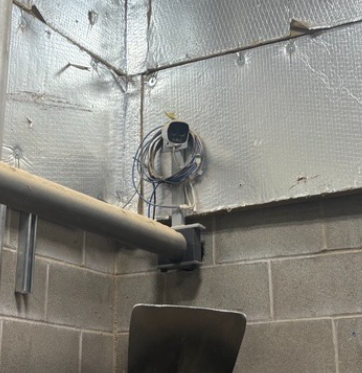
Fire risk is an ever-present concern in sawmills. Between high-speed planer heads, friction, heat, and fine wood dust, it doesn’t take much for a small issue to turn into a major incident. For the team at Potlatch, thermal monitoring offered a simple, affordable way to add another layer of protection without overhauling existing systems or adding operational complexity.
Read on to learn how Potlatch implemented a single Opticom Tech thermal camera in its planer mill, why they chose that approach, and how it’s already shaping future monitoring plans.
A Targeted Approach to Fire Monitoring
Potlatch’s initial thermal monitoring deployment is intentionally focused. Rather than installing cameras throughout the facility, the team chose one high-risk area: the planer heads inside the planer mill.
“We wanted to make sure we had all reasonable fire monitoring precautions in place,” said Evan Neveau, Operations Technology Analyst at Potlatch. “Thermal monitoring made sense, and we decided to move forward with an initial test case.”
The camera continuously monitors temperature changes around the planer heads—an area where friction and heat buildup can become a problem quickly. By watching for abnormal heat patterns before smoke or flames appear, the mill gains valuable early warning time.
One Camera, Multiple Integration Options
Although this is a single-camera installation, the setup is anything but limited.
The camera’s alarm output is wired directly into the mill’s PLC. When a thermal threshold is exceeded, the PLC receives a closed-contact signal that shows up as an alarm on the HMI. Potlatch can maintain its cameras on a completely separate network and still get the alert signal across, even though there is no IP traffic between the camera and any device on the ICS Networks.
The system is currently configured for alerting only—no automatic shutdowns or slowdowns—but the foundation is there if Potlatch chooses to expand functionality later.
Opticom Tech’s thermal camera comes with an RTSP option in addition to hardwired configuration.
Dual Sensor View Without Added Complexity
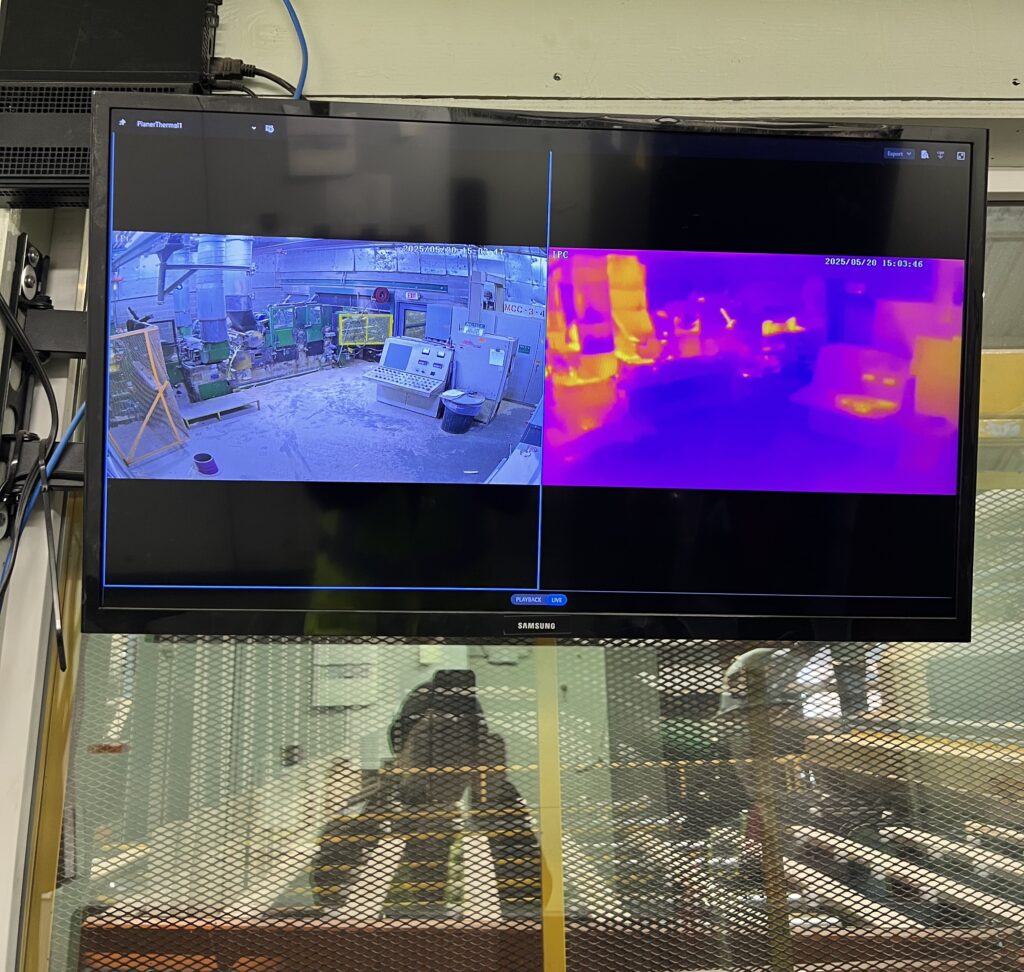
One feature that stood out during the selection process was the camera’s dual sensor design and viewing options. Unlike other thermal systems, operators can view both the thermal image and a standard visible-light image at the same time.
“The side-by-side view is convenient,” Neveau said. “We didn’t have to add extra hardware, and having it all in one camera made things simpler.”
Integrated Into Existing Video Software
Rather than creating a standalone system that operators would have to check separately, Potlatch integrated the thermal camera directly into its existing video management software, which also integrates several Opticom Tech CC04 industrial cameras.
“It was important to us to have everything in one place,” said Neveau. “Having a separate system just for thermal wouldn’t be as useful.”
Because the thermal camera lives alongside other video feeds, operators and maintenance staff can easily pull it up, review footage, and correlate alerts with what was happening operationally at the time.
Fewer False Alarms, More Confidence
People do actively look at the thermal feed, but its primary value is passive monitoring—knowing the system is always monitoring, even when no humans are watching.
Since the camera was fully hooked up this summer, Potlatch has not experienced any false positives. And thankfully, there haven’t been any real fire events to trigger a full alarm outside of testing. But that’s exactly the outcome the system is designed to support.
A Test Case With Clear Next Steps
This first thermal camera is very much a proving ground, and so far, it’s doing its job.
“It’s a test case, but it’s going well,” Neveau said. “We’re already looking at adding another camera and potentially monitoring other areas. The system is affordable enough that we have room to expand.”
Future locations could include additional high-risk equipment zones or even maintenance and shop areas. Because the system integrates with Potlatch’s existing infrastructure, expansion doesn’t require a major redesign.
Built on Practical Experience
Beyond the technology itself, Neveau emphasized the value of working with a partner who understands sawmills.
“Heidi’s sawmill and manufacturing experience was helpful,” Neveau noted. “This environment is very different from standard security monitoring.”
From quick quotes to fast shipments and support, that practical knowledge helped keep the project straightforward and efficient.
Simple, Scalable, and Effective
Potlatch’s experience shows that thermal monitoring doesn’t have to be complex or expensive to be valuable. A single, well-placed camera—integrated into existing systems—can provide meaningful fire monitoring benefits and lay the groundwork for future expansion.
For sawmills looking to take a proactive approach to fire risk without disrupting operations, this kind of focused thermal deployment is a practical place to start. Want more information? Contact us.
Statements in this content do not constitute any guarantee of fire prevention.