Skip to content
In industrial settings where operations never pause, video monitoring systems must deliver continuous reliability, situational awareness, and actionable insight. Designing such a system takes more than choosing cameras—it requires an operational mindset that supports live decision‑making, proactive maintenance, and safety compliance.
Let’s look at how you can design such a video monitoring system.
Basics of Designing a Video Monitoring System for 24/7 Operations
While there is no one-size-fits-all in industrial video monitoring, there are some steps we take when we advise our customers on how to choose a system designed for 24/7 operations.
Set Clear Objectives from the Start
A first step should be defining why you need continuous industrial operations monitoring:
- Do your operations rely on real-time video monitoring for operators running machinery or watching over production?
- Is your aim to detect equipment faults early, prevent downtime, ensure operator safety, or support quality audits?
- Do you need siloed remote access—for maintenance, quality, or safety teams—to view live or recorded feeds independently?
- Are there regulatory or internal compliance requirements for documented visibility of operations?
Video monitoring can do a lot for you, from measurable improvements in uptime and throughput to enhanced safety oversight. But this can only happen if you clarify the operational uses early on.
Select the Right Cameras for Industrial Use
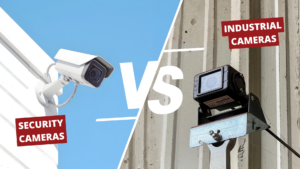
Off‑the‑shelf surveillance cameras typically fail under industrial stress like vibration, impact, dust, washdowns, and extreme temperatures. Instead:
- Use high‑vibration and impact‑resistant industrial cameras in areas with conveyors, saws, or mechanical pressing.
- Use bullet or PTZ cameras outdoors or in dusty zones where light and weather conditions change frequently.
- Use cameras with stainless steel IP67‑rated housings for washdown or corrosive environments.
These industrial cameras can reliably run 24/7, even under severe industrial conditions.
Consider the Entire Infrastructure
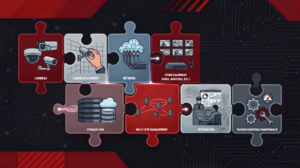
A video monitoring system for 24/7 operations requires more than a few cameras linked to a monitor. You also need a robust backend:
- Design the network to segregate live-monitoring traffic from corporate IT systems—this preserves bandwidth and resilience.
- Choose NVRs or hybrid software platforms tailored to your facility size and retention needs.
- Consider a hybrid storage architecture: local NAS for fast retrieval and cloud backup for disaster recovery.
Additionally, operator room or cab stations should include a dedicated decoder/server and a sufficiently sized display (commonly 55″ or larger) to present real‑time feeds clearly and without latency.
Add Alarm Integration to Your 24/7 Video Monitoring System
Continuous video is powerful, but without context, it can be overwhelming with so many hours of footage. This is why we advise our customers to integrate video feeds with well‑designed alert systems:
- Use motion detection, analytics, or event‑triggered snapshots to flag anomalies.
- Document operator response protocols that define alarm prioritization, acknowledgement, and escalation.
- Follow standards like ISA‑18.2, IEC 62682, or EEMUA 191 to structure your alarm operating logic.
Support Maintenance and Predictive Operations
24/7 video monitoring supports not just visual oversight, but also maintenance strategies:
- Teams can spot visible signs of wear like belt misalignment, vibration, leaks, and other issues before failure. This means you can implement predictive maintenance, rather than reactive fixes.
- Over time, combining video observation data with other sensor input builds toward an intelligent maintenance system that optimizes uptime and reduces unplanned downtime.
You don’t have to plan for all of these things right now, when you are designing your first video monitoring system for 24/7 operations. But you do have to make sure that the system you choose allows for scalability and integrations in the long run.
This is the easiest way to get the best possible long-term ROI out of your system.
Don’t Forget about Cybersecurity and Access Controls
When cameras are networked, they can introduce security holes. This goes for any device you connect to the network in any facility, whether it’s a sawmill, a mine, or a wastewater treatment plant.
This is why there are a few things you need to account for from the design phase of your system:
- Perform regular firmware updates and network audits.
- Isolate camera networks, avoid direct port forwarding, and employ firewalls or IDS/IPS systems.
- Apply least-privilege access controls and multi-factor authentication for remote viewing, especially in sensitive process zones.
Building a Video Monitoring System for 24/7 Operations
The points above barely scratch the surface of what goes into building a video monitoring system from scratch. Beyond rugged cameras, monitors, and various accessories, there are dozens of other decisions that need to be made.
For example, one of the most common ones is whether you should use an all-rugged approach or opt for a hybrid video monitoring system.
It seems overwhelming, which is why at Opticom Tech, we don’t just sell cameras. We sell complete solutions that are designed for your facility’s needs. We work closely to understand your needs and offer personalized solutions.
Curious how we can help? Schedule a phone consultation or on site visit with our experts.