Skip to content
Opticom Tech sawmill thermal camera
Thermal video monitoring used to sound like something only the biggest facilities could afford. Complex installations, costly rebuilds, and redundant hardware scared smaller and mid-sized sawmills away from upgrading.
But the reality is shifting: today, mills can integrate thermal cameras into their existing monitoring systems without gutting infrastructure or draining budgets.
Let’s break down how sawmills can add thermal monitoring capabilities strategically, keep costs reasonable, and still reap the ROI benefits.
Start With Integration, Not Replacement
One of the biggest misconceptions about thermal monitoring is that you need to rebuild your entire video system from scratch. That’s rarely the case.
Thermal cameras can complement your existing network of video cameras. Instead of tearing down what you already have, you can add thermal monitoring in critical zones:
- High-friction points on the line
- Planer Heads that are prone to overheating
- Debarkers, kilns, and sawlines where fire risk is highest
This targeted approach ensures you’re not over-investing where it’s not necessary. In fact, many mills find that just a few strategically placed thermal cameras deliver outsized safety and maintenance benefits.
For more details on how thermal monitoring helps extend equipment life and reduce unplanned downtime, see our piece on thermal monitoring for wear and tear.
Dual-Sensor Cameras: One Device, Two Views
Another way to avoid unnecessary costs is choosing a dual censored camera—with dual streaming as well.
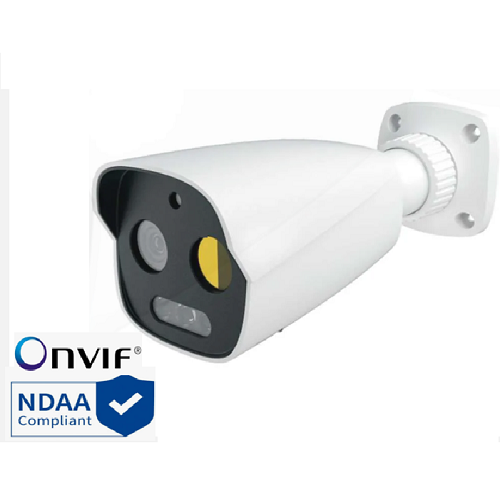
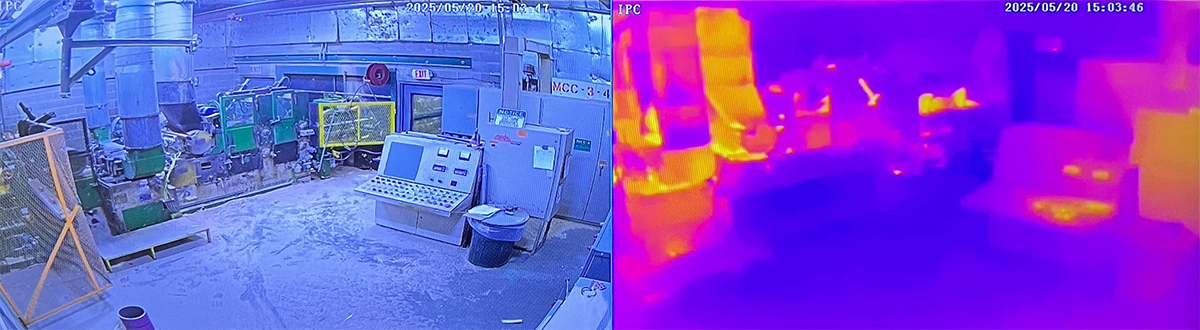
Opticom’s thermal cameras provide both a thermal feed and a standard video feed side by side. Operators don’t have to toggle between two screens or invest in separate cameras to monitor the same area.
This matters for cost control in two ways:
- Hardware Savings: You buy and install one camera instead of two.
- Operational Efficiency: Operators have the right views on their screens and can respond faster to issues.
For sawmills with wide coverage areas, reducing the number of devices without compromising visibility can translate into significant long-term savings.
Build a Phased Deployment Plan
Going all-in on thermal monitoring in one sweep is often the fastest way to overspend. Instead, consider a phased rollout:
- Pilot Phase: Install thermal monitoring on one or two high-risk assets. Gather data and validate ROI.
- Expansion Phase: Extend coverage to fire-prone areas of the mill, such as kilns or chip piles.
- Full Integration: Add coverage as budget allows.
By phasing deployment, you align investment with proven results. It’s much easier to justify additional cameras when you can point to early wins, like detecting a failing bearing before it shuts down a line.
We’ve covered this in more depth in our post on predictive maintenance in sawmills.
Use Existing Network Infrastructure
Most sawmills already run video monitoring systems connected to their IT network. An experienced sawmill video monitoring partner can help you leverage what’s already in place by:
- Adding thermal monitoring to your existing network
- Using the same cabling where possible
- Consolidating feeds into your existing video management system
- Sharing storage resources for thermal and standard video footage
Strategic integration reduces installation complexity and avoids paying twice for infrastructure. Many of our sawmill customers are surprised to find just how easily thermal monitoring slots into their current setup.
Focus on ROI, Not Just Cost
Cheap isn’t always cost-effective. The goal should be maximizing ROI, not just minimizing upfront spend.
Thermal monitoring helps sawmills save money in three major ways:
- Fire Prevention: Catch hot spots before they ignite. Sawmills are prone to fires and it’s an important risk to mitigate.
- Reduced Downtime: Detect overheating motors and bearings before they fail.
- Longer Equipment Lifespan: Monitor wear and tear to schedule maintenance proactively.
When you weigh these benefits against the cost of installation, you realize that proper video monitoring in sawmills has an incredible ROI. A single avoided fire or unplanned shutdown can pay for the system many times over.
Partner With the Right Vendor
The video monitoring partner you choose plays a major role in both upfront and long-term costs. Look for one that understands industrial environments, and ideally sawmill specifically, not just office or even standard industrial video systems—sawmills are unique in their needs..
Key things to ask:
- Does the vendor offer dual-sensor cameras to reduce hardware needs?
- Are their cameras built to withstand dust, vibration, and heat?
- Can they integrate with your existing video management system?
- Do they have experience in sawmills or similar heavy industries?
Think Beyond Compliance
Many mills first consider thermal cameras for insurance or regulatory compliance. While that’s important, limiting your perspective to compliance misses the bigger financial picture.
Thermal monitoring doesn’t just check a box—it actively protects revenue. Every avoided fire, every prevented equipment failure, and every extra year of machine life adds up to substantial financial value.
That’s why “not breaking the bank” isn’t just about keeping installation costs low but about designing a system that delivers compounding ROI year after year.
Thermal Cameras for Sawmills: Final Thoughts
Installing thermal cameras in your sawmill doesn’t require a complete system overhaul or a massive capital project. How do we know? We install them in sawmills across North America.
Not sure which thermal cameras are right for your sawmill? Schedule a call with our experts.
Statements in this content do not constitute any guarantee of fire prevention.