Skip to content
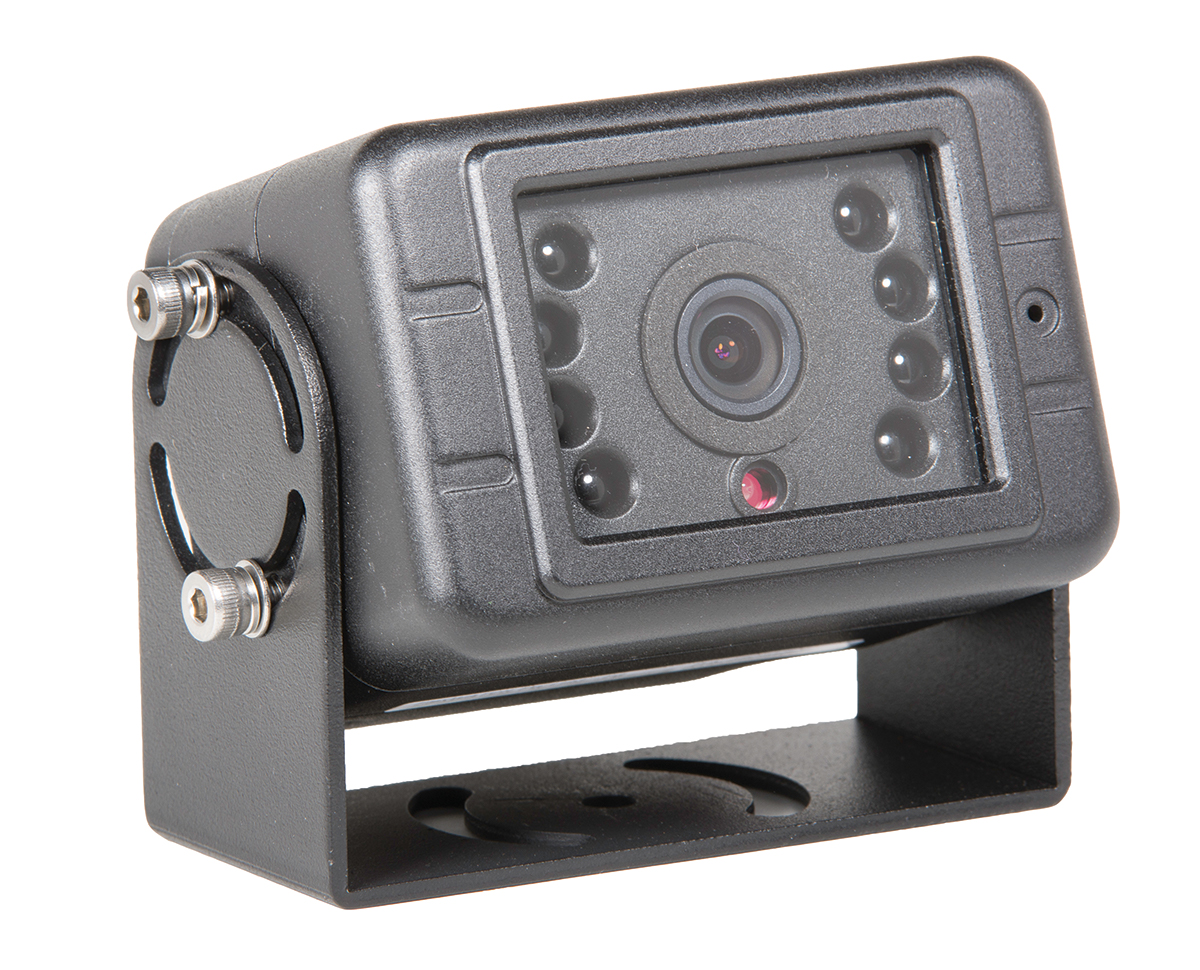
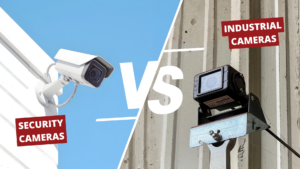
Unlike commercial security cameras, Opticom Tech's industrial cameras are built to handle tough industrial environments.
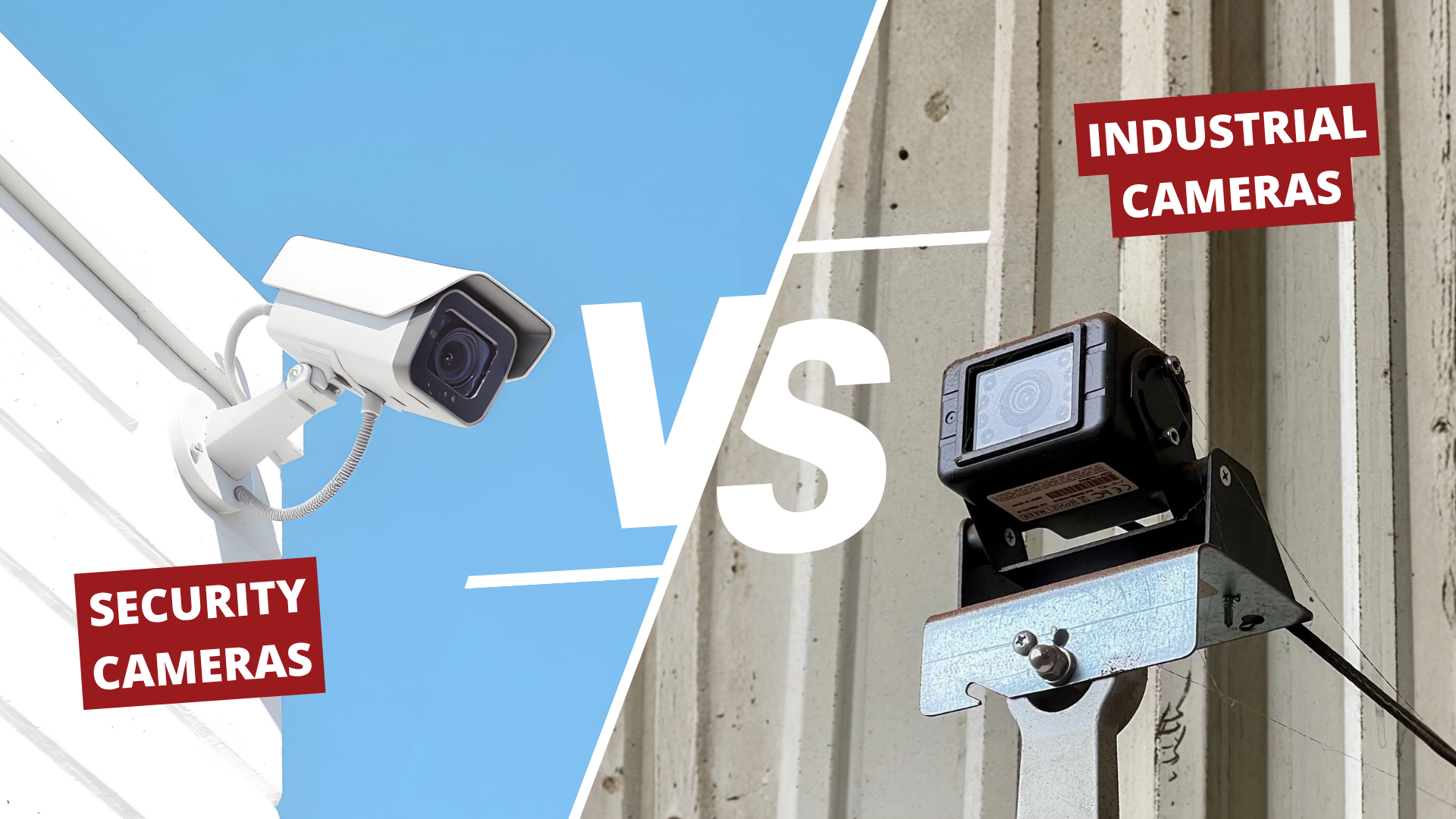
Walk through any industrial facility—sawmill, food processing plant, mine, etc.—and you’ll see cameras mounted on walls, ceilings, and equipment. For many facilities, the initial reason for installing cameras was security: preventing theft, monitoring entrances, or documenting incidents.
But in modern industrial environments, cameras have evolved far beyond traditional surveillance. They are now essential tools for operations, safety, maintenance, and process improvement. The difference between a standard security camera and a purpose-built industrial camera system can directly impact uptime, worker safety, and your facility’s bottom line.
Understanding that difference is critical before investing in new equipment or expanding your current system.
Security Cameras Still Have an Important Role
Let’s start with this: security cameras absolutely have their place in industrial facilities. At Opticom Tech, we offer commercial cameras in addition to our durable industrial cameras because we know the importance of both.
They are well-suited for areas like:
- Building entrances and exits
- Parking lots and loading docks
- Office spaces and administrative areas
- Perimeter security
- Visitor monitoring
In these environments, conditions are relatively stable. Temperatures are controlled, vibration is minimal, and exposure to dust, moisture, or debris is limited. Standard commercial-grade security cameras are typically sufficient (and cost-effective) for these applications.
The challenge arises when standard security cameras are expected to perform in environments they were never designed to handle.
Where Security Cameras Fall Short in Industrial Environments
Industrial facilities are demanding environments. Equipment runs continuously. Machinery creates high vibration. Airborne dust and debris are common. Temperatures fluctuate. Moisture, chemicals, and washdowns may be routine.
These conditions quickly expose the limitations of typical security cameras. Common problems include:
- Frequent camera failures due to vibration and other environmental factors
- Blurry or unstable video due to vibration
- Corrosion or contamination from dust and moisture
- Poor visibility in low-light or high-heat areas
- Increased maintenance and replacement costs
Off-the-shelf cameras that work perfectly in an office can fail in days or weeks on a production floor. In harsh environments, durability is a requirement. Most retail and commercial cameras simply aren’t built to withstand the physical stress found in industrial settings, leading to frequent replacements, downtime, and higher long-term costs.
And downtime is expensive. When visibility into operations disappears—even temporarily—production decisions become harder, response times slow down, and safety risks increase.
Industrial Cameras Are Built for the Realities of Your Facility
Industrial cameras are designed specifically for demanding environments where reliability is non-negotiable.
Key differences include:
Rugged Construction
Industrial cameras are engineered to withstand:
- High vibration
- Extreme temperatures
- Dust and debris
- Moisture and washdowns
- Impact and shock
They come with sealed housings, specialized mounting systems, and industrial-grade components that maintain performance under continuous stress.
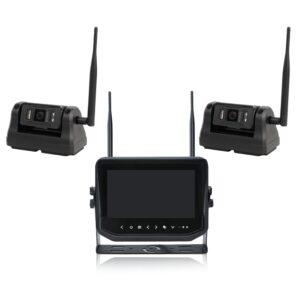
For example, vibration-resistant mounts, like what comes with the Opticom Tech CC02V camera, absorb shock and stabilize the camera to protect sensitive internal components and preserve image quality—even when installed directly on heavy equipment.
This durability translates directly into reliability, which is essential for continuous operations.
Continuous Operation
Industrial cameras are built for 24/7 performance.
They are designed to:
- Maintain consistent video quality
- Resist environmental damage
- Operate reliably in remote or hazardous locations
- Deliver uninterrupted visibility into critical processes
- Last for years in harsh, unforgiving environments
In many facilities, an uninterrupted video feed supports uninterrupted production.
Industrial Cameras Go Beyond Security
Perhaps the biggest difference between security cameras and industrial cameras isn’t the hardware—it’s how they’re used.
In industrial settings, cameras go beyond security to become operational tools. They help teams make better decisions, prevent failures, and improve efficiency across the entire facility.
Here are some of the most valuable ways industrial cameras support operations.
1. Improving Operational Visibility
Industrial processes are complex. Equipment interactions, material flow, and worker movement all affect productivity. Cameras provide a real-time view of operations that is difficult to achieve from the floor alone.
With proper placement, teams can:
- Identify bottlenecks
- Monitor production flow
- Verify equipment performance
- Improve workflow efficiency
- Support remote supervision
Even small improvements in productivity can deliver significant financial returns. Industrial cameras make those improvement opportunities visible.
2. Enhancing Safety and Reducing Risk
Safety is a top priority in every industrial facility and cameras play a growing role in protecting workers.
Industrial cameras help teams:
- Monitor hazardous areas from a safe distance
- Verify compliance with safety procedures
- Detect unsafe conditions
- Investigate incidents accurately
- Train employees using recorded footage
Remote monitoring is especially valuable in high-risk environments, including sawmill operator cabs where real-time monitoring is central to production. Operators can observe processes without standing near moving equipment, reducing exposure to danger while maintaining control over operations.
Video monitoring systems also provide documented evidence of safety practices, which can support compliance with regulatory requirements and internal safety programs and provide evidence for regulators and insurance providers.
3. Supporting Predictive Maintenance
Maintenance teams are constantly balancing reliability and cost. Industrial cameras provide visual insight into equipment performance, which helps teams identify problems before they become failures.
Examples include:
- Detecting abnormal vibration
- Spotting material buildup
- Monitoring belt alignment
- Identifying overheating components
- Observing wear and tear
This proactive approach enables predictive maintenance to be scheduled, which reduces unexpected shutdowns. The result is fewer emergencies, lower repair costs, and more predictable production schedules.
4. Enabling Root Cause Analysis
When production slows or equipment fails, finding the root cause quickly is critical. Recorded video provides a clear record of events leading up to an issue.
Teams can review footage to:
- Understand equipment failures
- Analyze process disruptions
- Identify safety incidents
- Improve procedures
- Prevent repeat problems
Without video, investigations rely on memory and guesswork. With video, however, decisions are based on evidence. That clarity saves time, reduces downtime, and improves long-term performance.
5. Lowering Total Cost of Ownership
One of the most common misconceptions is that industrial cameras are more expensive.
Upfront, that may be true. But over time, industrial systems provide strong ROI.
The right system with the right cameras lasts longer and requires fewer replacements, which saves money in maintenance, parts, and labor. Frequent replacement of low-cost cameras can quickly exceed the cost of investing in durable equipment from the start.
Rugged cameras reduce maintenance needs and keep operations running without interruption. The ROI of reliable operations is unique to each facility, but it can quickly go above and beyond the cost of an integrated video monitoring system.
How to Choose the Right Camera for the Right Job
The decision between security cameras and industrial cameras isn’t an all-or-nothing choice of one over the other. When you’re evaluating cameras to determine if industrial is the way to go or if commercial security cameras will suffice, ask these questions:
- What environment will the cameras operate in?
- Will they be exposed to vibration, dust, or moisture?
- Is continuous operation required?
- Will the footage support operations, safety, or maintenance?
- What happens if the camera fails?
In most industrial facilities, the answers to these questions lead to a hybrid camera system:
- Commercial cameras for low-risk, simple environments
- Industrial cameras for production and process monitoring
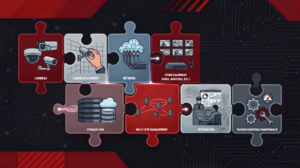
This approach balances performance, reliability, and cost, especially when you can get all of your industrial and commercial / security cameras from one partner like Opticom Tech.
The Bottom Line on Security Vs. Industrial Cameras
Security cameras help protect your facility, but industrial cameras help run it. They support operations, improve safety, reduce downtime, and provide the visibility needed to keep production moving.
Choosing the right camera system is one of the most practical investments you can make in reliability, safety, and efficiency. If you’re evaluating your current system—or planning an upgrade—let’s talk.