Skip to content

When a piece of equipment fails, a quality issue appears, or production unexpectedly slows down, one question immediately comes to mind: What went wrong? This is followed by other questions: Will it happen again? Is it something we need to address?
In industrial facilities, finding these answers can be the hardest part of solving a problem. Whether it’s a sawmill, food processor, mining operation, manufacturing plant, or other industrial facility, troubleshooting frequently relies on limited information, educated guesses, or waiting for the problem to happen again.
The reality is that some of the most expensive production issues are also the most difficult to observe. They occur intermittently, happen in hard-to-reach areas, or disappear before anyone can investigate them.
The right camera setup can change that equation.
Portable troubleshooting camera systems are giving facilities a faster, more practical way to diagnose problems without the cost and delays of installing permanent cameras.
The Challenge of Troubleshooting
Industrial facilities are complex environments with hundreds of moving components working together. When something goes wrong, maintenance teams need accurate information to determine the root cause.
Common troubleshooting scenarios include:
- Equipment malfunctions
- Mechanical failures
- Product quality defects
- Unexpected machine shutdowns
- Process bottlenecks
- Safety incidents and near misses
The challenge is that these events often occur without warning.
A piece of equipment might malfunction once every few shifts. A machine may occasionally produce defective products. A process upset might happen for only a few seconds before correcting itself. By the time someone arrives to investigate, the evidence—and the information needed to fix the issue—is gone.
Traditional Troubleshooting Methods Have Limitations
Up until now, when facilities have needed visibility into a problem area, they typically choose one of several approaches—none of which are ideal.
Option 1: Install a Permanent Camera
Permanent camera systems provide excellent visibility, but they aren’t always practical for temporary troubleshooting.
Installing a new camera often requires:
- Running cable
- Installing mounting hardware
- Configuring network connections
- Scheduling maintenance or contractor resources
The result is delayed troubleshooting and higher costs. For a problem that may only require a few days or weeks of investigation, the installation effort can be difficult to justify.
Option 2: Use Consumer Cameras
We’ve seen some facilities attempt to solve the problem with consumer-grade cameras or action cameras (like Go Pros). While this can provide video footage, it often creates additional challenges:
- Limited storage and battery life
- Difficulty viewing footage in real time
- Manual file retrieval and review
- Reliability concerns in industrial environments
Instead of simplifying troubleshooting, these solutions can create more work for maintenance teams.
Option 3: Assign Someone to Watch the Process
Perhaps the most expensive approach is assigning a worker to monitor an area and wait for the issue to occur. This method is common when problems are intermittent or difficult to reproduce.
Unfortunately, it creates several problems:
- Labor costs
- Personnel pulled away from higher-value tasks
- Rare events may not occur during observation periods
- Human observation can miss critical details
- Reporting is based on human interpretation
Maintenance teams don’t have the time or staff to have employees watch a process for days (or weeks) hoping a problem appears.
A Better Option: Portable Troubleshooting Camera Kit
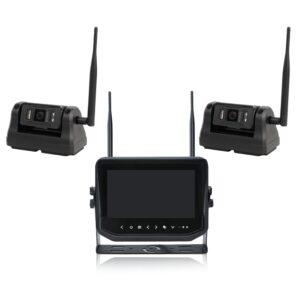
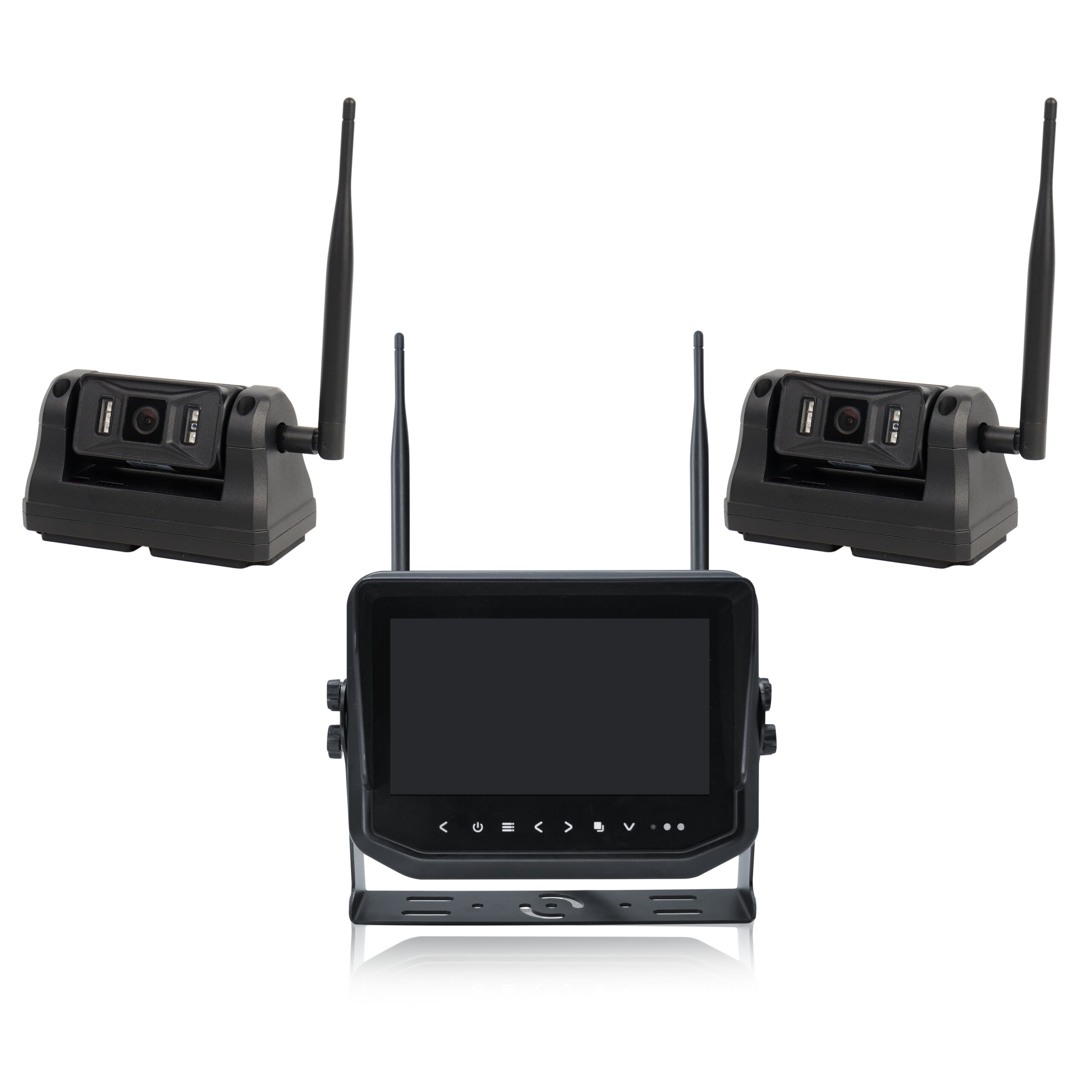
Opticom Tech’s portable troubleshooting camera kit offers a more efficient solution. Instead of installing permanent infrastructure or relying on temporary consumer devices, facilities can deploy a purpose-built camera system exactly where visibility is needed.
The concept is simple. When an issue needs investigation:
- Place the portable camera(s) in the problem area
- Put the kit’s monitor in a handy spot to watch for the issue
- Begin capturing footage immediately
Our kit offers features that make the self-contained kit truly portable. Choose magnetic mounting so to security attach cameras to equipment or structural components without drilling. A portable battery eliminates the need for hardwired power. Wireless networking gets video feeds where they need to go without cabled network access.
Quick setup allows maintenance and operations personnel to observe the process without extensive installation work. Plus, once the issue has been diagnosed, the kit can be moved to the next troubleshooting project.
Capturing Problems That Are Difficult to Reproduce
One of the biggest advantages of a portable troubleshooting camera system is its ability to capture intermittent events that may happen once per shift, during startup or shutdown, under specific operating conditions, or at random intervals.
Without video evidence, maintenance teams often rely on operator descriptions or assumptions. But video provides objective information.
Instead of asking, “What do you think happened?” teams can review footage and see exactly when the event occurred, what equipment was involved, what happened, if something specific led to the event, and more. This objective information accelerates root-cause analysis and helps prevent recurring failures.
Video footage can also be shared with equipment OEMs to give them exactly what they need to understand and diagnose an issue with their machine. No costly site visits or shutting down the equipment for diagnostics.
Faster Answers, Lower Costs
At its core, troubleshooting is about reducing uncertainty. Every hour spent trying to determine why a problem occurred is an hour that production, maintenance, and management teams are operating without answers.
Portable troubleshooting cameras help facilities shorten that timeline by providing direct visual evidence of what’s happening in the process.
Instead of investing in permanent camera installations for temporary investigations, relying on consumer-grade equipment, or assigning personnel to watch equipment for extended periods, facilities can deploy a dedicated troubleshooting solution where it’s needed most at any given time.
The result is faster diagnosis, more effective root-cause analysis, reduced downtime, and better-informed maintenance decisions.
For industrial facilities focused on improving reliability and operational performance, having the ability to quickly add video visibility wherever problems occur may be one of the most valuable troubleshooting tools available. Does this sound like something your facility could use? Get a quote or send us your questions.